

IS ACUPUNCTURE RIGHT FOR YOU?
Acupuncture

Questions? Call (201) 444-7150 or email acujosh@acupunctureYES.com
•
Questions? Call (201) 444-7150 or email acujosh@acupunctureYES.com •

An individualized approach to pain, stress, and your overall health
People turn to acupuncture for many different reasons.
You may be dealing with back or neck pain that’s making everyday activities harder. Maybe tight, achy muscles keep coming back no matter how much you stretch or massage them. Stress or anxiety may be affecting your sleep, energy, digestion, or ability to relax. Or you may be navigating fertility concerns or another health issue that simply isn’t improving the way you hoped.
Whatever brings you in, the goal isn’t to treat every patient with the same set of acupuncture points.
At Integrative Acupuncture Center, we look at your symptoms, your health history, and what we find during your evaluation to develop an individualized treatment plan based on what’s happening in your body.
How does acupuncture work?
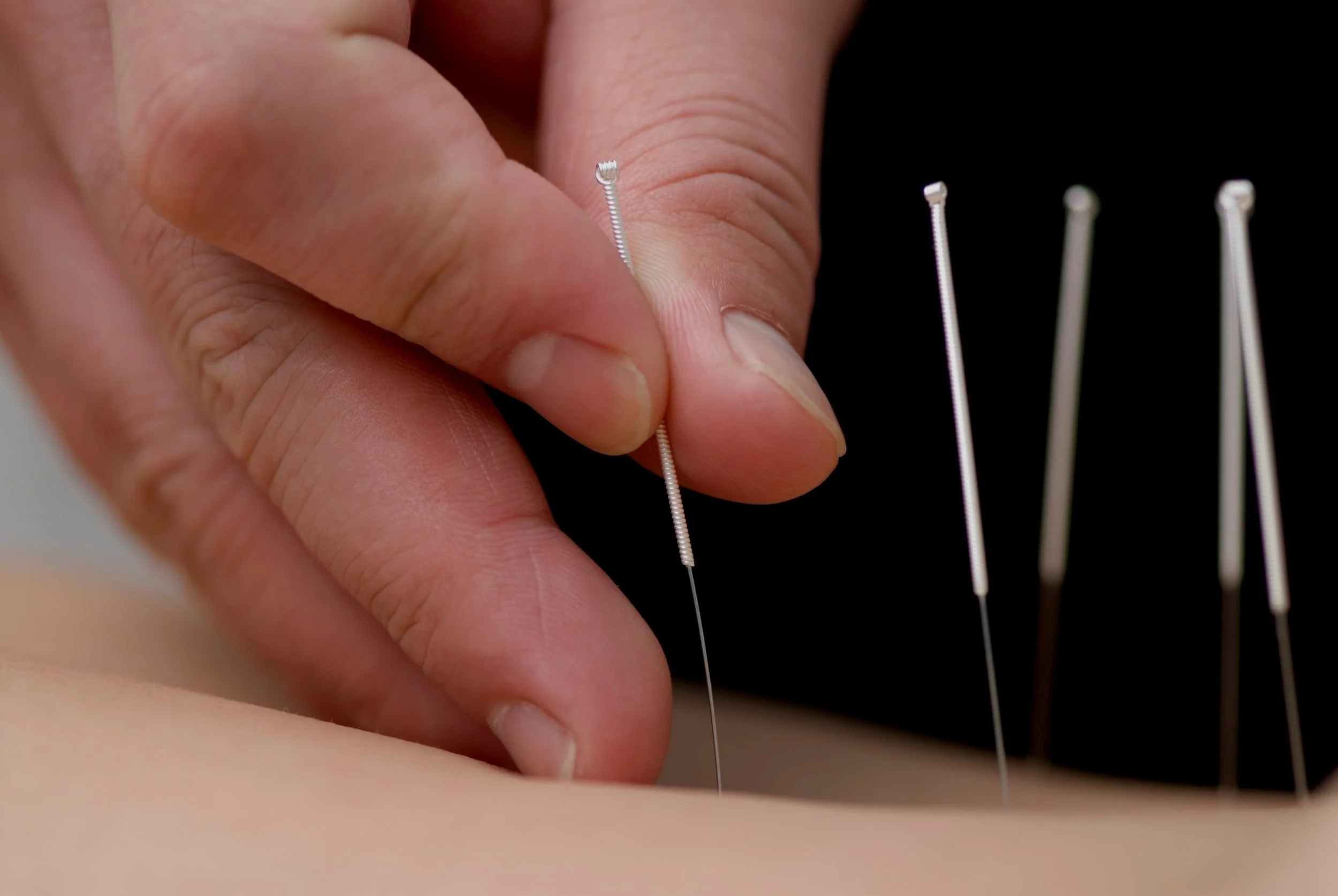
Acupuncture works to enhance blood flow to the muscles, joints, and organs of the body. Blood carries oxygen and substances involved in the body’s natural healing processes, and increasing circulation is an important part of the way we approach pain, mobility, and overall health.
Acupuncture also stimulates the release of endorphins and the body’s natural pain-relieving substances. Depending on what we’re treating, it can be used to help reduce pain and swelling, relax tight or spasming muscles, improve range of motion, and calm the nervous system.
Chinese medicine looks beyond simply asking whether disease is present or absent. We also look at how well your body is functioning and where there may be opportunities to improve circulation, reduce pain or tension, support relaxation, and help your body function more effectively.
For patients looking for a drug-free, non-surgical approach to managing pain, tension, stress, and other health concerns, acupuncture gives us another way to work with the body rather than simply treating the symptom in isolation.
Treatment often begins by focusing on your most immediate symptoms, such as pain, tension, or difficulty sleeping. As those symptoms improve, we can shift our attention toward supporting your overall health and addressing factors that may be contributing to recurring discomfort. Some patients also choose ongoing maintenance treatments to help sustain their progress and support their long-term well-being.
Successful at Work. Exhausted at Home.
A Case Study: Andres
Andres’s Story
Andres was 34 years old, managing an entire division at work and preparing for one of the biggest events of his life: the birth of his first child.
From the outside, he was successful and handling his responsibilities.
Behind the scenes, however, the stress was beginning to catch up with him.
His Body Never Seemed to Shut Off
All day long, people needed answers. Decisions had to be made. Deadlines had to be met. And when one problem was solved, another seemed to take its place.
By the time Andres left work, he told me he had “zero energy.”
But he wasn’t simply tired.
When the pressure increased, he could feel his heart racing. His mind continued thinking about work long after the workday was over. At night, he was exhausted, but couldn’t switch off.
He would toss and turn trying to fall asleep, then wake up tired and begin another demanding day without feeling fully recovered.
Little by little, Andres felt like he was running out of gas.
“How Am I Going to Keep Up With a New Baby?”
What finally motivated Andres to get help wasn’t simply being stressed at work.
It was what the stress was beginning to take away from him at home.
His wife was pregnant with their first child, and Andres wanted to enjoy this exciting time with her. Instead, he was coming home exhausted.
And he started wondering what would happen once the baby arrived.
If he already had nothing left in the tank at the end of the workday, how was he going to help his wife, get up with a newborn, work the next day, and still be the father he wanted to be?
Andres wanted to:
Sleep through the night and wake up feeling more restored
Stop carrying the workday around with him all evening
Reduce the feeling of his heart racing when overwhelmed
Quiet his mind at night
Have more consistent energy
Come home with something left in the tank
Enjoy time with his wife
Feel physically and mentally prepared to become a father
He wasn’t looking for a stress-free life. He wanted to be able to handle his life without feeling completely drained by it.
We Built His Treatment Around What Stress Was Doing to Him
He couldn’t come down from the workday.
We used acupuncture treatments to help reduce stress, promote relaxation, and address the physical tension associated with his demanding days. The goal was to make the transition from work mode to home mode easier.
He was exhausted, but couldn’t sleep.
We also incorporated a regimen of Chinese herbs to help him calm and retrain his nervous system between sessions and better regulate his stress levels.
Better sleep wasn’t simply about making him less tired. It was an important part of helping him recover so he could start the next day with more in the tank.
His energy was gone by the end of the day.
We looked at his diet and daily habits and made practical nutritional changes designed to support more consistent energy throughout the day. We also discussed vitamin and supplement recommendations appropriate for his individual needs.
The goal wasn’t to artificially push him harder. It was to help him stop feeling so depleted.
What Happened Over the Next Two Months?
The changes didn’t happen overnight. They built gradually as Andres continued with his treatment and recommendations.
Over approximately two months of care, Andres reported significant improvements.
His anxiety decreased. He found it easier to come down from the workday. His sleep became more restorative, and he wasn’t spending as much time lying awake with his mind racing.
As his sleep and ability to recover improved, his energy began to improve as well.
Most importantly, he started coming home with something left in the tank.
Instead of simply wanting to collapse after work, he began looking forward to spending time with his wife. He even had enough energy and enthusiasm to help organize a baby-naming celebration for their soon-to-arrive child.
The Stress Didn’t Disappear. Andres Changed How He Responded to It.
His job was still demanding. People still needed answers. There were still deadlines. And he was still preparing to become a first-time father.
We didn’t remove the stress from Andres’s life.
The difference was that he reported being better able to handle the demands, come down from the workday, sleep more restoratively, and have energy left for the people who mattered most to him.
He wasn’t asking for a life without stress.
He wanted his life back from the stress.
Individual results vary. Andres’s experience represents his individual response to treatment and does not guarantee similar results for every patient.
Stop Living Life with No Gas in the Tank!
If you think this is unthinkable, Andres results are typically what I see day in and day out for people who follow up with the recommendations and follow up with appropriate treatment.
If you are too stressed out to even think that you can ever relax again, then you are definitely stressed out. What are the consequences for you if you don’t get your anxiety under control? When you feel depleted, you cannot have enough energy to function and you start to break down mentally. This occurs slowly, over time. Can you relax enough to have some fun again? Well then it is time to get checked and treated. We design personalized programs based on your needs, not in a one-size-fits-all fashion. Find out why people are turning to acupuncture and Chinese medicine for stress relief.
Call now to get a consultation, where we will outline your specific concerns. If interested in help, I can make gentle, no pressure recommendations to help you start feeling better.
Call 201-444-7150, or email me at integrativeacupuncturecenter@gmail.com. My office is located at 69 West Ridgewood Avenue in Ridgewood, NJ.
I look forward to hearing from you and helping you!



Questions you may have:
Can acupuncture and Chinese medicine help calm anxiety and stress?
Yes. Acupuncture stimulates the release of endorphins, which can help promote relaxation and reduce feelings of stress.
Acupuncture also stimulates the body’s rest-and-digest response to help counteract the fight-or-flight response. This can help the body shift out of a heightened stress state and into a more relaxed one.
Stress can also show up physically. Tightness in the neck and shoulders, digestive tension, difficulty sleeping, and a racing mind are all ways patients may experience it.
Acupuncture can be used to help relax tight muscles, calm the nervous system, and support circulation throughout the body.
Chinese herbs may also be incorporated into an individualized treatment plan. Formulas are created around your specific needs and can provide a “take-home” component of treatment between acupuncture visits.
Is acupuncture effective with infertility?
Approximately 40% of infertility cases occur for unknown reasons, meaning there isn't always a clear explanation for why someone is having difficulty becoming pregnant.
Acupuncture and Chinese medicine may be incorporated into fertility care to:
Help stimulate ovulation
Enhance blood flow to the uterus
Support the hormones involved in conception and pregnancy
Support egg quality
Chinese medicine can be used to support women who are trying to become pregnant naturally or who are undergoing assisted reproductive treatments.
Reducing Stress While Trying to Conceive
The fertility process itself can also create significant stress and anxiety. Acupuncture may be used as part of treatment to help reduce stress and promote relaxation while you’re trying to conceive. For some patients, fertility treatment requires time. Working consistently with your practitioner over several months allows treatment to be adjusted as your needs change.
What can I expect at my first acupuncture appointment?
Your first visit begins with a conversation about your symptoms, health history, and what you'd like to improve. I'll conduct a non-invasive evaluation, explain what I'm finding, and recommend an individualized treatment plan based on your needs. If you're new to acupuncture or nervous about needles, that's completely understandable. I'll explain the process, answer your questions, and make sure you're comfortable before we begin. Many patients find acupuncture much more relaxing than they expected.
Can Acupuncture Help Lower Back Pain?
Understanding What’s Really Causing Your Pain
Lower-back pain is one of the most common reasons people seek treatment. But “lower-back pain” is not one single condition. Two people can both walk into our office saying, “My back hurts,” yet the reasons for their pain can be completely different. Lower-back pain may involve tight muscles, muscle spasms, irritated nerves, sciatica, herniated or bulging discs, arthritis, spinal stenosis, or a combination of several problems. That is why treating lower-back pain begins with an important question: What is actually contributing to your pain?
Why Consider Acupuncture for Lower-Back Pain?
When we use acupuncture for lower-back pain, we aren’t simply treating the name of the diagnosis or what appears on an MRI. We are looking at the person in front of us. Where does the pain begin? Does it travel? Are the muscles tight or spasming? Is there burning, tingling, or numbness that may indicate nerve involvement? What movements make the pain worse or better? How is the problem affecting walking, sitting, sleeping, working, and exercising? Acupuncture may be used as part of a conservative approach to help reduce pain, decrease muscular tension and guarding, calm irritated nerves, and improve function. The goal isn’t necessarily to change what appears on an MRI. The goal is to change how you feel and how well you function.
Not All Lower-Back Pain Is the Same
The way your pain feels can give us important clues about what may be happening. A severe muscle spasm may make it difficult to straighten up, get out of a chair, or turn over in bed. An irritated nerve may produce burning, tingling, numbness, or shooting pain that travels into the buttock or down the leg. A herniated disc may irritate a nearby nerve and produce both lower-back and leg symptoms. Someone with spinal stenosis may find that standing and walking aggravate symptoms while sitting or bending forward provides relief. Sometimes several of these problems occur together. Understanding these differences helps us develop an individualized treatment approach instead of treating every person with lower-back pain exactly the same way.
Acute vs. Chronic Lower-Back Pain
It is also important to consider how long you’ve been hurting. Acute lower-back pain may develop suddenly after lifting something, exercising, making an awkward movement, or seemingly for no reason at all. Many acute episodes improve over time. Chronic lower-back pain is generally defined as pain lasting 12 weeks or longer. Chronic problems can become more complicated because the original problem may be accompanied by persistent muscle guarding, restricted movement, nerve sensitivity, and changes in how someone uses their back. A person who injured their back three days ago may therefore require a very different approach from someone who has been living with lower-back pain for three years.
Muscle Tightness and Lower-Back Spasms
Sometimes the muscles themselves are a major contributor to lower-back pain. Muscles may tighten or spasm following overuse, lifting, prolonged sitting, an awkward movement, an injury, or irritation of the surrounding joints and nerves. Acupuncture may be used to help decrease pain and reduce muscular tension and guarding. As the muscles begin to relax, movement may become easier and the cycle of pain followed by protective tightening may begin to decrease.
Herniated and Bulging Discs
The discs between the vertebrae act as cushions within the spine. When a disc bulges or herniates, it can sometimes irritate or put pressure on a nearby nerve. This may produce lower-back pain along with numbness, tingling, burning, weakness, or pain traveling into the buttock or leg. Acupuncture cannot physically push a herniated disc back into place. Instead, treatment focuses on the symptoms and surrounding tissues that may be contributing to the patient’s discomfort, including pain, protective muscular tension, and an irritated or sensitized nerve.
Sciatica and Irritated Nerves
Sciatica is commonly used to describe pain that travels from the lower back or buttock down the leg. It can feel like a deep ache, burning sensation, electrical pain, tingling, or sharp shooting pain. When treating someone with sciatica, we don’t only focus on where the pain is felt. We also look at what may be irritating the nerve and whether surrounding muscular tension or other factors are contributing to the problem. Acupuncture may be incorporated into a conservative treatment approach aimed at reducing pain, relaxing surrounding muscles, and calming irritated nerves.
What About Spinal Stenosis?
Spinal stenosis occurs when spaces within the spine become narrowed, either within the spinal canal itself or in the openings through which nerves exit the spine. Acupuncture cannot remove bone, reverse arthritis, or physically widen a severely narrowed spinal canal or foramen. But having spinal stenosis doesn’t necessarily mean that every component of someone’s pain is coming directly from the narrowing. A patient may also have an irritated nerve, muscle spasms, muscular guarding, or other painful soft-tissue problems occurring alongside the stenosis. These are some of the factors we may attempt to address with acupuncture. When significant structural narrowing is causing progressive weakness, major loss of function, or other neurological problems, additional medical or surgical evaluation may be necessary. The purpose of acupuncture isn’t to pretend that the stenosis isn’t there. It is to determine whether there are components of the patient’s pain that may respond to conservative treatment.
Often, More Than One Thing Is Going On
The body doesn’t always divide back problems into neat categories. A patient may have arthritis and a bulging disc on an MRI while also experiencing severe muscle spasms. Another person may have spinal stenosis combined with an irritated nerve producing pain down the leg. One problem can then trigger another. An irritated nerve may cause surrounding muscles to tighten protectively. Tight muscles may restrict comfortable movement. Moving differently because of pain can place additional stress on other muscles and joints. Part of our treatment strategy is attempting to interrupt that cycle.
Look Beyond the Pain Score
Pain levels are important, but they don’t tell the whole story. When determining whether someone is improving, we also want to know what is changing in everyday life. Can you walk farther? Sit through dinner more comfortably? Put on your shoes more easily? Sleep through the night? Get through your workday with less discomfort? Is the pain traveling less distance down your leg? Are muscle spasms happening less frequently? These improvements can be just as meaningful as seeing a pain score decrease. Ultimately, we want to see you functioning better.
Improvement Should Build Over Time
One acupuncture treatment usually isn’t enough to tell us how much someone may improve, particularly with a problem that has existed for months or years. Instead, we look for a pattern over a course of treatment. Perhaps the first treatment gives you several hours of relief. After additional treatments, the relief may begin lasting longer. Maybe the pain isn’t traveling as far down the leg. Perhaps you can stand longer, sleep better, or walk farther before symptoms begin. We want to see improvement building from treatment to treatment. That progression helps us determine whether acupuncture is providing meaningful benefits and whether continuing care makes sense.
When Acupuncture Is Not Enough
Acupuncture is not the appropriate stand-alone treatment for every person with lower-back pain. Progressive leg weakness, significant loss of function, new bowel or bladder problems, numbness around the groin or saddle area, fever associated with severe back pain, or certain traumatic injuries require prompt medical attention. Likewise, if someone is not responding appropriately to conservative treatment, additional evaluation may be necessary rather than simply continuing the same treatment indefinitely. Knowing when acupuncture may help and when a patient needs additional medical care is an important part of treating lower-back pain responsibly.
We Treat the Person, Not Just the MRI
The MRI can provide valuable information, but it is one piece of a larger puzzle. We also consider your symptoms, medical history, physical examination, daily limitations, and how your body responds to treatment. Most importantly, we want to know how the problem is affecting your life. Can you work? Exercise? Walk? Sleep? Play with your children or grandchildren? Do the things you want to do without constantly thinking about your back? That is why our approach can be summarized very simply: We don’t simply treat the MRI. We treat the person experiencing the pain.
Could Acupuncture Be an Option for Your Lower-Back Pain?
If you are struggling with lower-back pain, sciatica, muscle spasms, a herniated disc, or spinal stenosis, the first step is determining what may be contributing to your symptoms and whether acupuncture is an appropriate option for you. At the Integrative Acupuncture Center, we look beyond the name of the diagnosis. We evaluate your symptoms, how your pain affects your everyday activities, and how your body responds to treatment. Our goal isn’t simply to lower a pain score. Our goal is less pain, better movement, better function, and helping you get back to the activities that matter to you.
Is acupuncture right for you?
There isn’t one standard acupuncture treatment that makes sense for every person who walks through the door.
Your symptoms, health history, goals, and what we find during your evaluation all help determine how we approach your care.
Depending on what’s going on, acupuncture may be used on its own or alongside Chinese herbs, cupping, Gua Sha, nutritional recommendations, or other elements of an individualized treatment plan.
Call Integrative Acupuncture Center at 201-444-7150 to schedule your consultation.
Let’s help you find relief. Naturally.

What Our Clients are Saying
-

"Joshua and his team worked so hard to get Acupuncture approved through my insurance ... Joshua has greatly helped me, through acupuncture and herbal management, to help with my Gastroparesis, EDS, and other chronic illnesses.”
Kate
-

"…I was suffering from chronic lower back pain, Joshua did a comprehensive examination and relieved my pain. It was amazing, I walked in stiff and uncomfortable and left feeling fantastic … Recently I began suffering from neck pain and after a few visits I have regained mobility and significantly less discomfort. Joshua is a truly gifted practitioner."
Paul

Learn more about each modality and we will create a plan tailored to fit your needs.
Joshua Goldstein L.Ac.
Licensed Acupuncturist
& Chinese Herbalist
Graduate of Pacific College of Oriental Medicine with a Master’s in Chinese Medicine
Board Certified Acupuncturist in New York and New Jersey
NCBAHM certified for over 26 years.
Several examinations are offered by the NCBAHM on many of the major branches, skills, and techniques of Oriental Medicine. Most states in the US require passing of one or more of these tests in order to become a licensed practitioner of the associated techniques.

Let me help you reach your fullest potential for health and pain-free living!
Questions? Call (201) 444-7150 or email acujosh@acupunctureYES.com
