
I never grew up thinking that I wanted to become an acupuncturist. In fact, it was the farthest thing from my mind at the time. I never knew such a thing existed! If you were to tell me in my college years that I'd be practicing acupuncture, I would be looking at you with my eyes sideways!
Now that I do acupuncture, I reflect back to that day when I told my dad I would be going to a four year school of intense training in Chinese medicine. He got pretty mad at me. He felt I was going into a life of the macabre, the twisted, the arcane. Worse, he felt I was wasting my life by doing this "woo-woo" kind of medicine.
I think what prompted his reaction were two things. He could only compute with the professions that he was comfortable with, such as a doctor, lawyer, or accountant (both my brother and my sister are accountants). And what was missing at the time (and still is!), like for most people, is a deeper understanding of the art of acupuncture and Chinese medicine.
I wish I could have told him then what I know now. Life between us would have been a lot better. So here are some essential facts about acupuncture that would have calmed my dad down so he wouldn't have been so angry at me for so many years.
Acupuncture Takes a Long Time to Get Good At
Passing a school board test is one thing, but when deciding how to treat a patient, they can have many different syndromes occurring at once, which makes it hard to treat their pattern of disharmony. "Pattern of disharmony" is where you ascertain different symptoms, wrist pulse configurations and tongue analysis, and you construct a working diagnosis as to how to treat the problem. Specific acupuncture points sedate; others tonify the body. Use the wrong combination and you don't get great results.
Simply put, symptoms are part of a larger context of a diseased state called a "pattern of disharmony." Connecting the dots to get an accurate diagnosis leads to better results. It is not simply treating the name of a disease, but how that disease or problem "lives" within you, the patient!
People Don't Know What Acupuncture Can Do Outside of Pain
Acupuncture is the most underutilized medicine. So many people can use acupuncture and Chinese medicine to treat immunity, mood disorders and digestive disorders. But like so many, people are unaware of what acupuncture can do for them. Did you know that the Veterans Administration now recognizes acupuncture for pain relief and post traumatic stress disorder?
A few years ago, I tried to do my part to increase awareness of acupuncture by offering acupuncture sessions to stressed out students during finals. I never got an in to help them out. I'd still like to do it because the proof is in the pudding. I was to do a simple 5 point treatment for reducing anxiety and stress by lowering the stress hormone called cortisol. I felt pretty passionate about that since I experienced terrible anxiety when taking tests and can remember how difficult it was to face tests on campus!
I also find that more serious problems, such as osteoarthritis of the knee among other conditions, simply need more regular acupuncture. People have a misconception that acupuncture is only good for the treatment of pain. Pain is a powerful motivator, but just like we go to the gym not only when we are feeling "fat" (although that is one time) but as a general wellness investment, people have been coming in for reducing stress hormones, hot flashes, allergies, fatigue, and just a better overall feeling of feeling "good," which comes from the release of neurotransmitters in the brain at very high levels.
Sleeping better and overall wellness occur when the body releases its own hormones and increases blood circulation to help the body repair itself. This takes regular treatments and a little time. For an investment broker I treat, who has two kids and a very busy business, reducing his allergies and rosacea, as well as giving him some stress support, is so helpful. I also treat a physical trainer for his aches and muscle spasms, as well as his MS symptoms, to reduce episodes of the involuntary shaking of the limbs and improve the quality of his life.
Most Textbooks on Acupuncture Are Too Simplistic
You need to study with a teacher or learn a system to get good at the medicine. When I first started school there were very few good translations of books out there. Now there are great translated books, but when it comes to patients, a lot has to be individualized, because patients' diagnoses are mixed and complicated. Rarely is a patient a classic textbook case with easy results. That's why it is so important to seek out teachers whom you can work with directly and get feedback from in the use of a system of acupuncture. This takes many years, weekends, webinars, classes and discussions with teachers and colleagues to get a good grasp on the treatment principles for getting people better.
Patient Cases Are Complicated
Why do we do a diagnosis? Don't we just stick needles in? Certain needles have a stimulating effect, others a sedating effect, while others have a good circulatory effect. Which ones are good for anxiety? Sedation points? Not always the case. We need to find out what the patient is struggling with and diagnose the problem to begin with, so that we can provide an accurate selection of acupuncture points to treat the condition effectively.
I was treating a patient for neck pain along the trapezius muscle. Instead of using the points that affect the upper back meridian, the channel that runs up and down the shoulders, I had to use acupuncture points near her ankle and her pinky finger, with better effect.
Another case involved a fatigued patient. She came across as run down, exhausted and tired, with a history of chronic fatigue. However, on further examination, by checking her wrist pulses for the jump of the pulse, this person showed signs of hyperactivity of the mind. This was the cause of her fatigue, as she was wearing herself out. We treated with specific acupuncture points with the effect of SEDATING her nervous system. You'd think that if someone is complaining of tiredness, then you need to strengthen them, but in Chinese medicine you need to understand the root of the problem. To use an analogy, she needed to have the air pressure reduced in her "tires" to reduce the fatigue she was suffering with. As a result, she felt MORE energy, and as the treatments progressed, she was able to calm herself down so that she felt more in control emotionally.
Sometimes the textbooks are too simplistic. In cases such as this, there can be non-textbook solutions. We just have to be really attuned to the nature of the problem.
A Good Acupuncturist Needs Many Other Skills
To become a good acupuncturist you need to learn many other skills, such as communication, diplomacy and accounting, besides the art of inserting needles and prescribing herbal formulas. Being an acupuncturist requires that you learn other skills to get people better. Communication is key for explaining acupuncture, making people understand how they got sick and what they need to do to get better. Hand holding, empathy, caring and sometimes laying down the line so people will do the things they need to do to get better. These skills take time to cultivate and to develop within you. Even QuickBooks takes a lot of practice, hence my smaller career as an accounts specialist!
Acupuncture Is a Licensed Profession, Really!
Acupuncture is actually a profession! Acupuncture, when performed in New Jersey, is regulated by the New Jersey Acupuncture Board under the Board of Medical Examiners.
On the national level there is national certification by the National Certification Commission for Acupuncture and Oriental Medicine (NCCAOM, a mouthful I know!), which requires extensive education and 60 continuing education credits every renewal cycle. That means constant study and practice makes a good practitioner, just like in any other profession. No, we don't consult crystal balls or do any divination to the gods. There are methods and techniques of diagnosis that help make treatments more successful.
Acupuncture Works by Enhancing the Body's Own Resources
Acupuncture sends signals to the brain, which in turn increases blood flow to the organs, brain and painful areas; shuts off pain by shutting down the signals that go to the brain from the painful area; releases endorphins so that you feel relaxed, more grounded, and a better sense of vitality; and releases hormones so you can control your PMS and your fertility. It works in tandem with blood vessels and muscle fibers. That's why you can't see a meridian: it is built into the workings of the body, and signals travel along nerves, in blood vessels, through signaling hormones, and through the brain.
So if only my dad understood these things at the time, perhaps he would not have been so angry. Most people feel their child is meant to be a doctor, a lawyer, or a certified accountant. I don't think being an acupuncturist was something he could ever envision for his son. Nevertheless, I don't think that he had any clue as to what an acupuncturist and Chinese medicine practitioner meant. If only he could have read this article sooner!
If you would like to find out whether acupuncture and Chinese medicine may help you, call Integrative Acupuncture Center at (201) 444-7150 or email acujosh@acupunctureYES.com. The office is located at 69 West Ridgewood Avenue in Ridgewood, NJ.
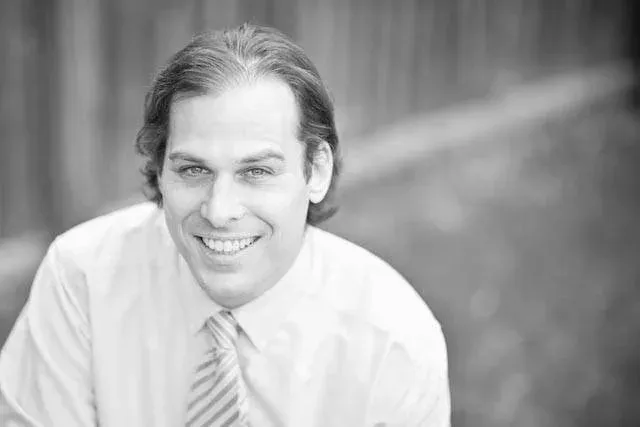
Joshua Goldstein, L.Ac.
Joshua is a licensed acupuncturist and Chinese herbalist in Ridgewood, NJ. He is board certified in New Jersey and New York and has been NCBAHM certified for more than 26 years.
Meet Joshua