Headaches and Migraines
No two people with headaches have exactly the same symptoms. Joshua looks at how your headache feels and where it travels so he can choose a treatment that fits your pattern.
How Chinese Medicine Looks at Headaches
Typical migraine symptoms include one-sided, throbbing or pulsating pain that is worse with activity, often with nausea or sensitivity to light and noise. Common triggers include stress, fatigue, poor sleep, menstruation and weather changes. Not everyone has all of these symptoms, and practitioners of Chinese medicine use these differences to guide treatment.
Joshua generally sorts headaches into three types based on how the pain feels:
- Radiating, pulsating or throbbing pain, often on one side of the head, is usually related to hyperactivity of the nervous system. Chinese medicine describes this as too much "Yang" energy stuck in the head, and it tends to get worse with stress or poor sleep.
- Pain that stays fixed in one spot is related to poor blood circulation through the vessels that feed the head.
- Pain that feels heavy or cloudy, like a wet towel wrapped around the head, is linked to sluggish lymphatic drainage, which Chinese medicine calls "dampness."
The location of the pain also matters. Headaches at the temples or above the eyes follow the Gallbladder meridian, headaches along the top of the head follow the Urinary Bladder meridian, and pain below the eyes and along the nose relates to the Stomach and Large Intestine meridians. These names describe pathways on the body and do not mean anything is wrong with those organs.
How Joshua Treats Headaches
Treatment depends on the type of headache. For stress-related headaches, Joshua uses acupuncture points and herbs that calm the nervous system. For fixed pain, he chooses points and herbs that increase blood flow to the area. For heavy headaches, treatment focuses on moving fluid through the lymphatic system. Because the meridians run the length of the body, points on the hands, arms or legs can be used to treat the head, so needles do not always need to be placed in the head itself.
Joshua also checks the neck and shoulders for knotted, tender muscles, since muscle spasm in these areas can send pain into the head. Many patients find that acupuncture also helps them manage stress, which is a common headache trigger.
Self-Care Tips
- Start the day with a protein-rich breakfast and have a snack with protein every two to three hours to keep blood sugar steady. Avoid bread, baked goods and other simple carbohydrates between meals.
- Relax your jaw by pressing on the tight spot in the center of the jaw muscle for about a minute a day while breathing deeply.
- Gently stretch your neck and jaw muscles, since a lot of stress is stored in these areas.
Acupuncture and Chinese medicine are not a substitute for medical care. Talk with your doctor about new, severe or worsening symptoms.
How Joshua may treat it
Care is tailored to each patient and often combines more than one approach.
Acupuncture
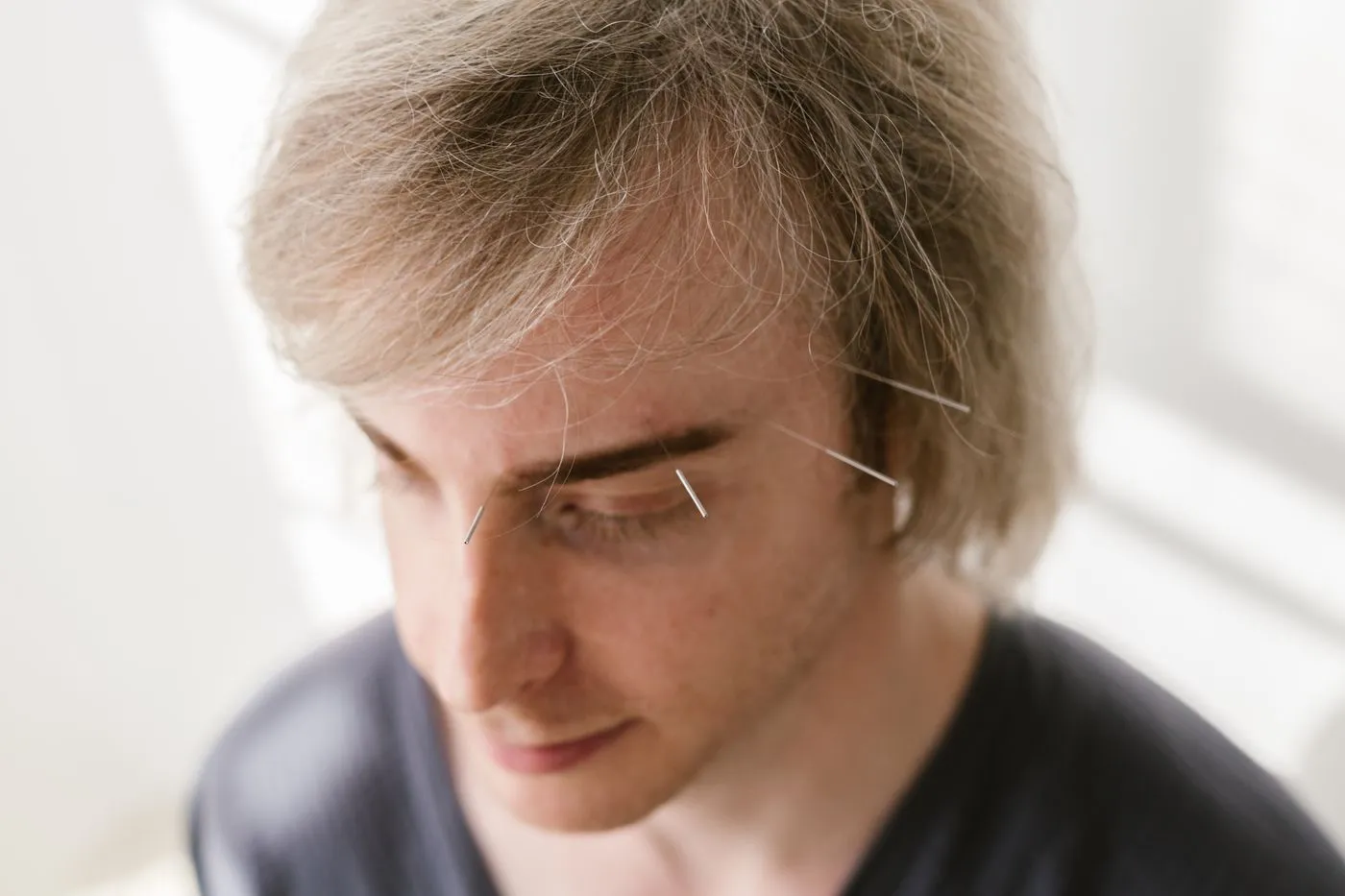
Thin, sterile needles placed at specific points to support the body's own healing response.
Chinese Herbal Medicine
Custom formulas that are adjusted as your condition changes.
Cupping
Glass cups that create suction to release tight, tense muscles.
Gua Sha
A traditional technique for tight, sore and restricted muscles.
Related articles
All articlesLet’s Get You Back to Doing What You Love
Whether it's gardening, playing with your kids, sleeping through the night, jogging on the beach, or simply getting through the day without pain, our personalized acupuncture treatments are designed to help you move, heal, and feel better naturally.